Dressing Baby for Fall: The Layering Guide That Actually Works
Crisp mornings, warm afternoons, and a baby who can't tell you if they're cold — here is exactly how to layer baby for fall weather, from stroller walks to nap time.
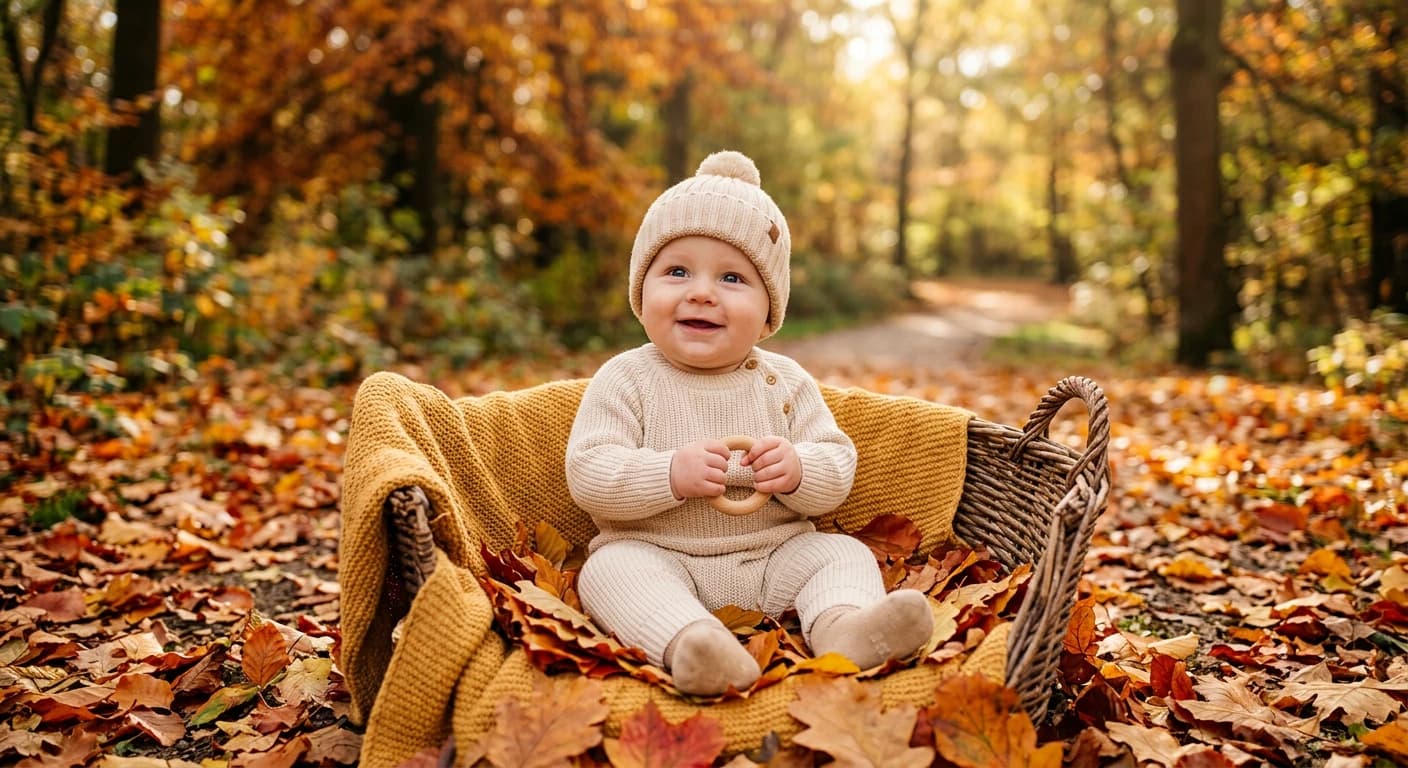
Fall is the trickiest season to dress a baby for. Mornings start near 50°F, afternoons climb into the 70s, and your baby can't tug at a collar or tell you they're too warm. Overdress them and they overheat — a real safe-sleep concern. Underdress them and you've got a fussy, cold baby on your hands. Here is the layering system that actually works, from nursery to stroller.
The "one more layer" rule
The most reliable rule pediatricians give: dress baby in one more layer than you're comfortable in — not two, not three. Babies regulate temperature less efficiently than adults, but they overheat just as easily as they get cold, and overheating is a known risk factor for sleep-related deaths. If you're comfortable in a t-shirt and light cardigan, baby needs a bodysuit, a light layer, and maybe a hat outdoors — not a snowsuit.
How to check if baby is actually cold
Don't trust baby's hands and feet — they're naturally cooler than the rest of the body and are a bad thermometer. Instead, feel the back of baby's neck or their chest. Warm and dry means just right. Cool and clammy means add a layer. Sweaty or flushed means remove one, immediately.
Layering for the nursery and sleep
Fall room temperatures swing more than any other season — a nursery that's 72°F at noon can be 63°F by 4 a.m. once the heat cycles down overnight. This is exactly what TOG ratings on sleep sacks are for (full breakdown in our sleep sack vs. swaddle guide):
- 68–72°F room: a 1.0 TOG sleep sack over a short-sleeve bodysuit. Our Soft Fleece Sleep Sack with Head Support sits right in this range.
- 61–67°F room (typical once heating cycles down at night): step up to a warmer sack, or add a long-sleeve bodysuit underneath — the Quilted Baby Sleeping Bag Wrap is built for this.
- Never add a loose blanket to compensate for a colder room. Layer the sack rating or the clothing underneath instead — not the bedding.
A $10 room thermometer for the nursery pays for itself in the first cold snap. Guessing the temperature by hand is how most fall overdressing happens.
Layering for the stroller and outdoor walks
A stroller blocks wind but not much else, so baby will feel closer to the actual outdoor temperature than you might expect sitting still. For a 45–55°F walk: a long-sleeve bodysuit (our Cotton Snap-Bottom Bodysuit works as a base layer year-round), a light fleece or knit layer on top, socks, and a hat — babies lose a disproportionate amount of heat through their head. Add a light blanket over the legs that you can pull off if baby heats up, rather than an all-in-one snowsuit that traps heat the second the stroller stops moving in the sun.
Check baby every 15–20 minutes on a walk. Stroller naps in direct afternoon sun heat up fast even at 55°F outside.
Layering for babywearing
This is the one place parents consistently overdress. A carrier is already a heat source — your body warms baby directly, plus the carrier fabric itself insulates. In fall weather, baby typically needs one fewer layer than they would in a stroller, not more. A bodysuit and a light layer is usually plenty under a carrier down to about 50°F; you supply the rest of the warmth. If you're using an all-season breathable hip seat carrier, the mesh panels help vent the extra heat two bodies generate — it's easy to overheat baby on a "just cool enough" walk because you forgot you're a space heater.
The layers you actually need this season
- 3–4 long-sleeve bodysuits as your base layer for everything above.
- 2–3 light cardigans, fleece pullovers, or knit layers that go on and off easily — front-zip beats pullover for a squirmy baby.
- 1 mid-weight sleep sack for the overnight temperature drop.
- A knit hat for stroller walks and any time you're outside longer than a quick errand.
- Socks or soft booties — feet get cold fast in an open stroller.
Notice what's missing: a heavy snowsuit or bunting. Save that for actual winter. In fall, layers you can add and remove beat one thick piece every time.
Signs you've got it wrong
Too warm: flushed cheeks, damp hair at the neckline, rapid breathing, a rash-like heat prickle. Too cold: cool torso or chest (not hands or feet), fussiness that resolves once you add a layer, pale or mottled skin. Both are fixable in under a minute if you check early and often — the goal isn't to get it perfect on the first try, it's to notice and adjust quickly.
The bottom line
Layer for the temperature you'll actually be in, check the back of baby's neck instead of guessing, and keep a couple of easy-on-easy-off pieces within reach for every outing. Fall weather changes faster than any other season — your baby's outfit should be able to change with it.


